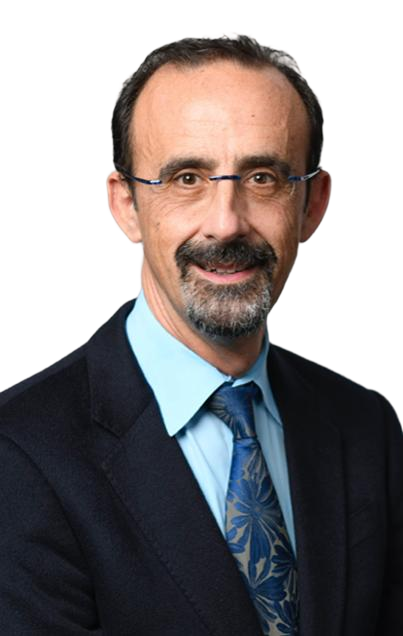
Dr Luis Benveniste
(UWC Atlantic, 1983-1985) Global Director for Education and Skills, The World Bank
Education must build the capabilities our world now demands
The world is facing a profound learning crisis.
Around 70% of children in low and middle income countries cannot read or understand an age- appropriate text by the age of 10. At the same time, 1.2 billion young people in emerging economies will enter the workforce over the next decade.
Our education systems were not designed for the level of disruption we are experiencing today,whether from conflict, climate pressure or artificial intelligence. The challenges are immense.Data on learning is sparse and non-comparable; and the most marginalised – refugee children,children with disabilities and those in conflict-affected settings – remain excluded from systemic solutions. Added to this is the pace of technological change. The green transition and AI-driven transformations in work are outpacing education systems’ ability to prepare young people with the skills they need, especially in low-resource settings with poor connectivity and tools designed for very different contexts.
In this landscape, value-based and experiential education programmes, such as UWC, are an essential part of the global response.
As AI reshapes employability, we need to develop durable human capabilities that are hardest to automate and most predictive of positive life outcomes: ethical judgement, empathy, collaboration across differences, civic purpose, lifelong learning. These capabilities complement rather than compete with intelligent machines. They are also critical for social cohesion.
One of the signature maxims that guided the founding of UWC was Kurt Hahn’s reminder that “there is more in you than you think”. On a personal note, those words have become a compass in my own life.
Embedding purpose and global citizenship alongside academic rigour means making service, environmental stewardship and intercultural collaboration core requirements of education systems. It means designing learning around diverse communities that cultivate empathy, conflict resolution and teamwork. UWC’s integration of academic study with meaningful service and community engagement offers proof that such a balance is both possible and powerful.
Solving the global learning crisis demands both technical and moral leadership. Governments and multilateral organisations must increase and better target education financing, strengthen implementation capacity, and hardwire learning into national priorities. At the same time, the world needs institutions that keep the larger purpose of education in view: shaping citizens and leaders who can work for peace, social justice and a sustainable future.
In divided societies, education must do more than transmit knowledge. It must build agency, strengthen empathy and equip young people to navigate disagreement without dehumanising one another.